
How Promotional Items Can Transform Your Business Brand and Drive Results
Discover how the right promotional items can boost brand visibility, build loyalty, and deliver measurable ROI for Australian businesses in 2026.

Written by
Ollie Brown
Corporate Gifts
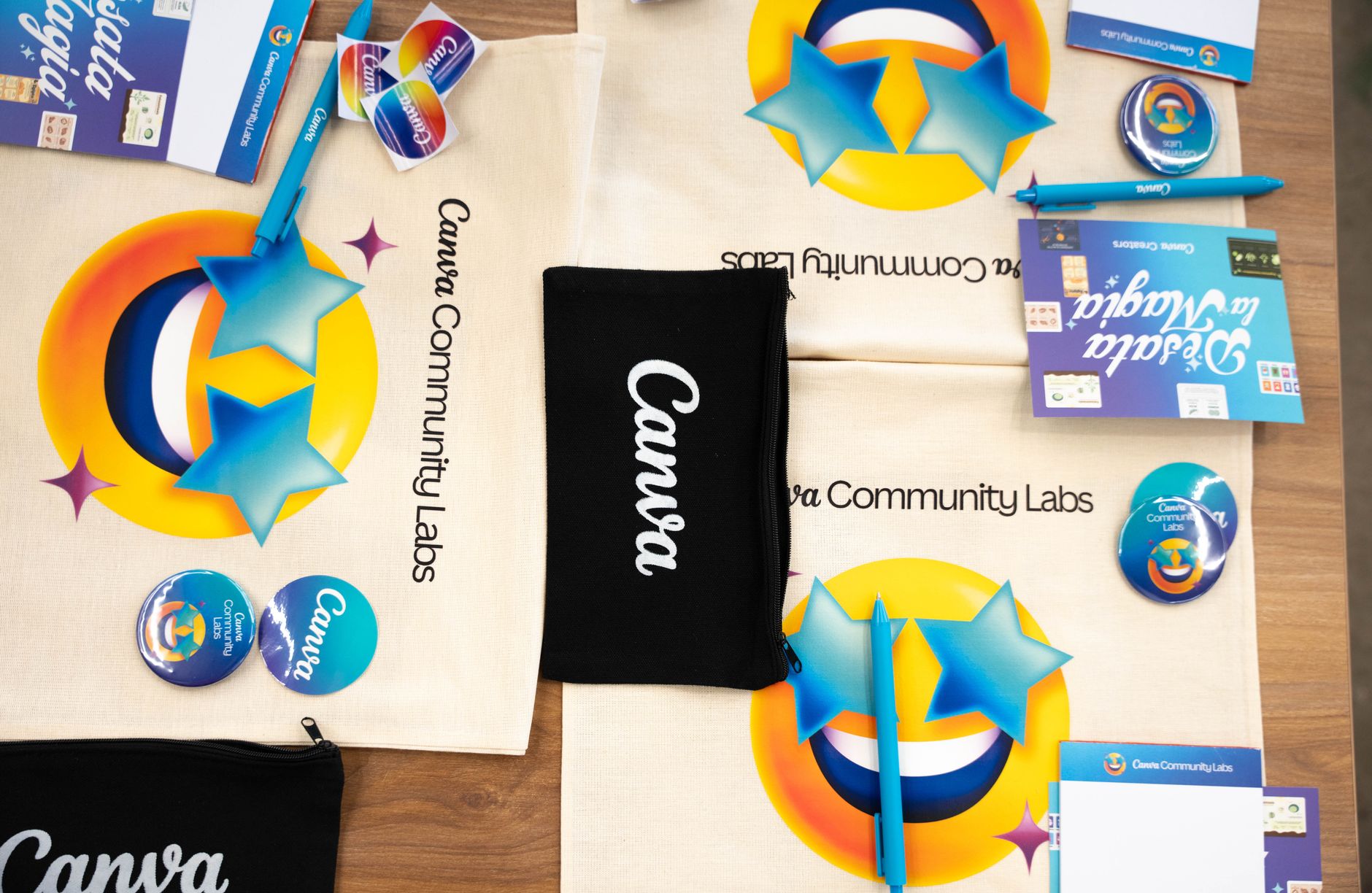
Every business wants to stand out. Whether you’re a boutique law firm in Melbourne’s CBD, a family-owned tradie business on the Gold Coast, or a tech startup launching in Sydney, the challenge of building a recognisable brand in a crowded marketplace is real. Promotional items for business offer one of the most cost-effective, tangible, and long-lasting ways to keep your brand front of mind — long after a meeting ends, an event wraps up, or a new client walks out the door. But getting the most from your investment means knowing what to order, when to order it, and how to make it work for your specific audience. This guide breaks it all down.
Why Promotional Items Remain a Smart Business Investment
In a world dominated by digital advertising, it might seem counterintuitive to invest in physical branded merchandise. Yet the numbers tell a compelling story. Promotional products are kept and used for months — sometimes years — generating repeated brand impressions with every single use. Unlike a social media ad that disappears after a scroll, a quality branded keep cup sitting on someone’s desk in a Brisbane office is seen dozens of times a day by multiple people.
The key advantage is tangibility. When a client or prospect receives something physical and genuinely useful, it creates a positive emotional association with your brand. That feeling of being valued is difficult to replicate through digital channels alone.
For Australian businesses operating in competitive sectors — real estate, financial services, construction, healthcare, hospitality — promotional merchandise can also serve as a powerful differentiator. When two comparable businesses are vying for the same client, the one that remembers to send a branded gift or produce a standout event giveaway often leaves a stronger impression.
The Three Core Goals of Business Promotional Products
Before placing any order, it helps to define what you’re actually trying to achieve. Most businesses use promotional items to accomplish one or more of the following:
- Brand awareness — getting your logo, name, and message in front of as many relevant people as possible
- Client retention — showing existing clients they’re appreciated, building loyalty and reducing churn
- Lead generation and conversion — using giveaways at trade shows, expos, or sales meetings to open doors and start conversations
Understanding which goal matters most will guide every decision that follows, from product selection to decoration method to budget allocation.
Choosing the Right Promotional Items for Your Business
Not all promotional products are created equal, and what works brilliantly for one business might fall flat for another. A Perth mining contractor has very different needs to a Canberra accounting firm or an Adelaide boutique fitness studio. Matching your product choice to your audience, industry, and intended use case is the most important decision you’ll make.
High-Impact Products That Consistently Deliver
Certain product categories tend to perform exceptionally well across a broad range of business contexts:
Drinkware is consistently one of the top-performing categories in promotional merchandise. Branded water bottles, insulated tumblers, and reusable coffee cups are used daily, making them ideal for long-term brand exposure. They’re particularly well-suited to health-focused businesses, outdoor industries, and corporate gifting. If you’re building out a premium client welcome pack, a quality insulated bottle with laser-engraved branding can make an outstanding impression. For a deeper look at how to select the right options, check out our guide to branded drinkware for Australian businesses.
Custom apparel — including polo shirts, t-shirts, hoodies, and caps — is another perennial favourite. For businesses with a team that interacts with customers in person, branded workwear instantly communicates professionalism and builds brand recognition. A fleet of service technicians in Perth all wearing embroidered polo shirts creates a cohesive, trustworthy image that generic uniforms simply can’t match. Our overview of custom workwear and branded apparel options is a great starting point if this is a priority for your business.
Tote bags and carry bags have become staples at conferences, trade shows, and corporate onboarding. A well-designed branded tote gets used repeatedly beyond the event itself — at the supermarket, gym, or beach — extending your brand’s reach far beyond the initial recipient. Read more in our guide to branded tote bags and promotional bags.
Stationery and desk accessories — branded notebooks, pens, mouse pads, and sticky note pads — are especially effective for businesses targeting office-based professionals. These items live on desks and in meeting rooms, delivering consistent impressions across the working week. For more on this category, explore our stationery and office product guide.
Tech accessories including branded power banks, USB drives, and wireless chargers are popular for tech companies, startups, and premium corporate gifting. They command higher price points but are kept and used far longer than lower-value items. We’ve covered the best options in our guide to tech promotional products.
Budget Considerations for Business Promotional Orders
One of the most common questions businesses ask is: how much should we spend? The answer depends heavily on your purpose and your audience.
As a general rule of thumb:
- Mass giveaways (trade shows, community events, large-scale brand awareness campaigns): budget $2–$8 per item
- Standard client gifting or event merchandise: budget $8–$25 per item
- Premium corporate gifts or VIP client packs: budget $30–$100+ per item
For many Australian businesses, a tiered approach works well — lower-cost items like branded pens or lanyards for broad distribution, with higher-quality products reserved for key clients and decision-makers. Our corporate gift budget planning guide can help you work through the numbers.
Decoration Methods: Getting Your Branding Right
The way your logo or message is applied to a product can be just as important as the product itself. A poorly executed print on a great product undermines the entire impression. Choosing the right decoration method ensures your branding looks sharp, lasts the distance, and suits the product you’ve chosen.
Embroidery is the gold standard for apparel and fabric items. It creates a professional, textured finish that communicates quality. It’s ideal for polo shirts, caps, jackets, and bags — particularly in corporate and hospitality contexts. The main consideration is that very fine or intricate logos can lose detail at small embroidery sizes.
Screen printing works exceptionally well for t-shirts, tote bags, and other flat fabric surfaces. It delivers vibrant, bold colours and is highly cost-effective at larger quantities. Screen printing is a popular choice for event merchandise, staff uniforms, and school promotional items. Learn more in our comparison of screen printing vs embroidery.
Laser engraving produces a sophisticated, permanent result on hard surfaces like metal, wood, glass, and plastic. It’s the preferred method for premium drinkware, pens, keyrings, and awards. The clean, precise finish tends to look particularly impressive on corporate gifts.
Pad printing is widely used for small, irregularly shaped items like pens, lanyards, and USB drives. It’s efficient and cost-effective for high-volume orders of compact products.
Sublimation allows full-colour photographic-quality printing across an entire surface. It’s ideal for custom apparel, mouse pads, and items where edge-to-edge branding is desired. For a full breakdown of all decoration options, see our decoration methods explained guide.
Ordering Strategically: Timelines, MOQs, and Avoiding Common Mistakes
Getting the most from your promotional items budget means planning ahead and avoiding the pitfalls that catch many businesses off guard.
Minimum order quantities (MOQs) vary significantly between product types. Branded pens and lanyards might have MOQs as low as 25–50 units, while screen-printed apparel often starts at 12–25 pieces per design. Custom-shaped products or items with complex decoration may require MOQs of 100 or more. Always confirm MOQs early in the process to avoid budget surprises.
Turnaround times in Australia typically range from 5–10 business days for standard orders, once artwork is approved. Rush orders are often possible but usually attract additional fees. For major events — EOFY functions, annual conferences, product launches — allow at least three to four weeks from order placement to delivery, particularly if you’re ordering across multiple product types.
Artwork preparation is an area where many businesses lose time unnecessarily. Suppliers need vector artwork files (typically .AI or .EPS formats) at the correct dimensions and in the specified colour format. Providing low-resolution JPEGs or PNG files from your website can delay your order by days. Have your graphic designer prepare print-ready files in advance. Our artwork file preparation guide walks through exactly what you’ll need.
Ordering samples before committing to a large run is always worth considering for new products or suppliers. A physical sample lets you check colour accuracy, material quality, and print finish before you commit thousands of dollars to a full production run. It adds a little time but can save significant cost and frustration.
For a comprehensive overview of the entire ordering process, our step-by-step guide to ordering promotional products in Australia covers everything from brief to delivery.
Building a Cohesive Branded Merchandise Strategy
The most successful businesses don’t treat promotional items as one-off purchases — they build a coherent merchandise strategy that aligns with their broader brand identity and marketing calendar. This means selecting products that reinforce brand values, maintaining consistent colour and logo application across all items, and timing distributions to coincide with key business moments.
A Sydney financial planning firm, for example, might plan quarterly client gifting rounds, produce branded merchandise for their annual client event, and supply new client welcome packs that include a curated selection of premium branded items. Over time, this creates a strong, memorable brand presence that supports client retention and referrals.
For businesses in particular sectors, there are also specific product strategies worth exploring — see our guide to promotional products for corporate events and our overview of branded merchandise for trade shows and expos.
Conclusion: Key Takeaways for Businesses Getting Started with Promotional Items
Investing in promotional items for your business is one of the most enduring and effective tools in a marketer’s toolkit. Done well, the right branded merchandise builds genuine brand loyalty, extends your reach, and creates lasting impressions that digital advertising simply cannot replicate.
Here are the key takeaways to keep in mind:
- Define your goal first — whether it’s brand awareness, client retention, or lead generation, your objective should drive every product and decoration decision
- Match the product to your audience — a premium client in Sydney has different expectations to an attendee at a community trade show in Darwin; choose accordingly
- Plan your budget in tiers — not every recipient needs the same level of investment; a tiered strategy stretches your budget further without sacrificing impact where it matters most
- Get your artwork right before you order — providing print-ready vector files from the start avoids costly delays and ensures your branding looks as sharp on the product as it does on screen
- Think strategically, not transactionally — the businesses that get the best return from promotional merchandise are those that build it into a consistent, long-term brand strategy rather than ordering ad hoc when something comes up
With the right approach, promotional items are far more than branded giveaways — they’re a meaningful extension of your business identity.